
Caravan of Culture - An Adorned Tea Pot
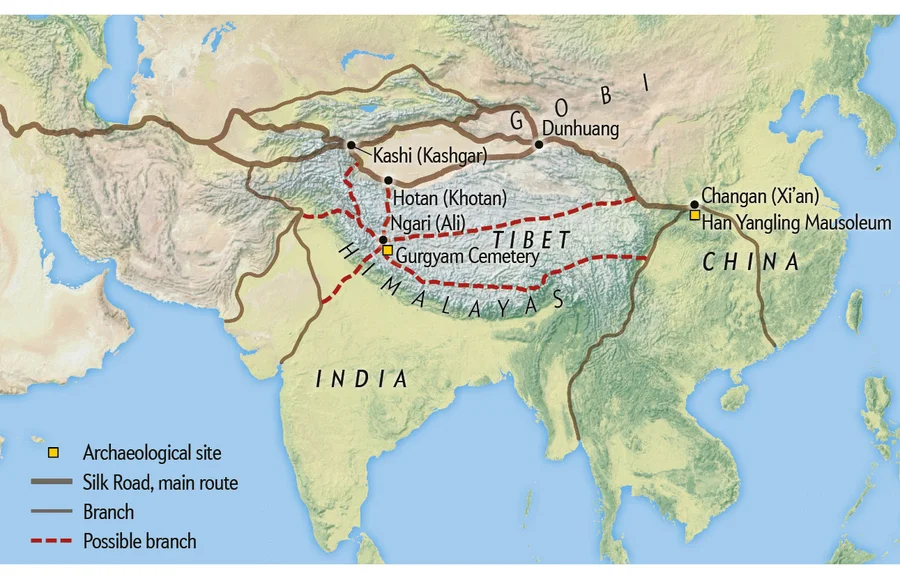
In the quiet corridors of a Tibetan monastery, a monk pours steaming butter tea into cups from a vessel. Outside, the wind howls over the passes. The tea, imported from Yunnan in southern China, travelled on the backs of yaks and traders over the treacherous high-altitude branches of the Silk Road.
Archaeological findings suggest that tea reached Tibet as early as the second century B.C.E., well before written records mention it. Tea residues found in ancient tombs in Tibet match chemical fingerprints of teas grown in Yunnan and even those found in the burial chambers of Chinese emperors. These traces confirm that a vibrant high-mountain artery of the Silk Road connected China and Tibet long before the better-known trade routes flourished.
A Vessel of Exchange: Form, Function, and Symbolism in a Tibetan Teapot
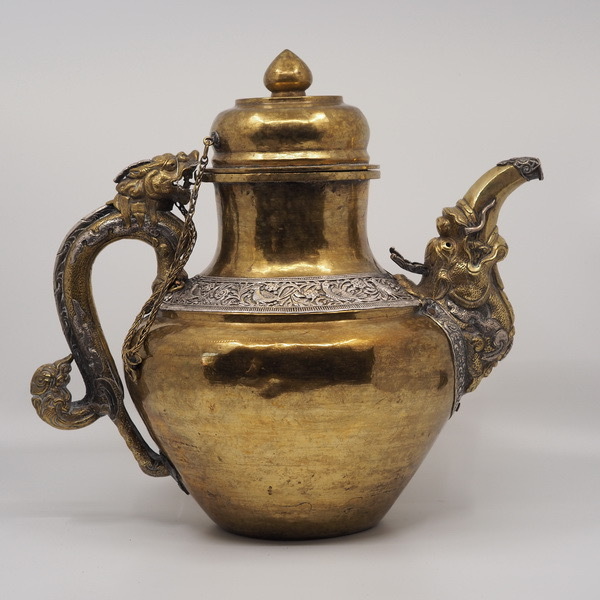
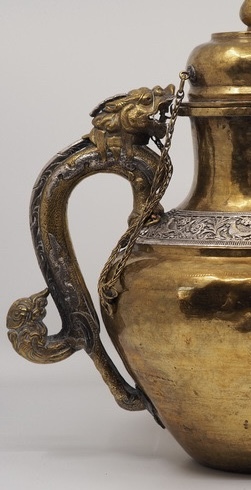
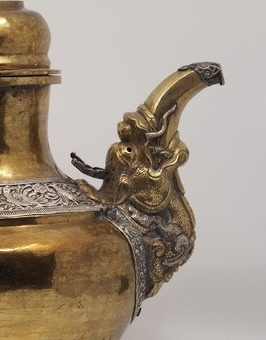
This teapot, dated from 1800 to 1900, therefore does more than serve liquid. It carries the memory of ancient trade routes and shared rituals. Its makara-headed spout not only represents protection in Tibetan Buddhist symbolism, but also evokes a deeper history of cultural transmission
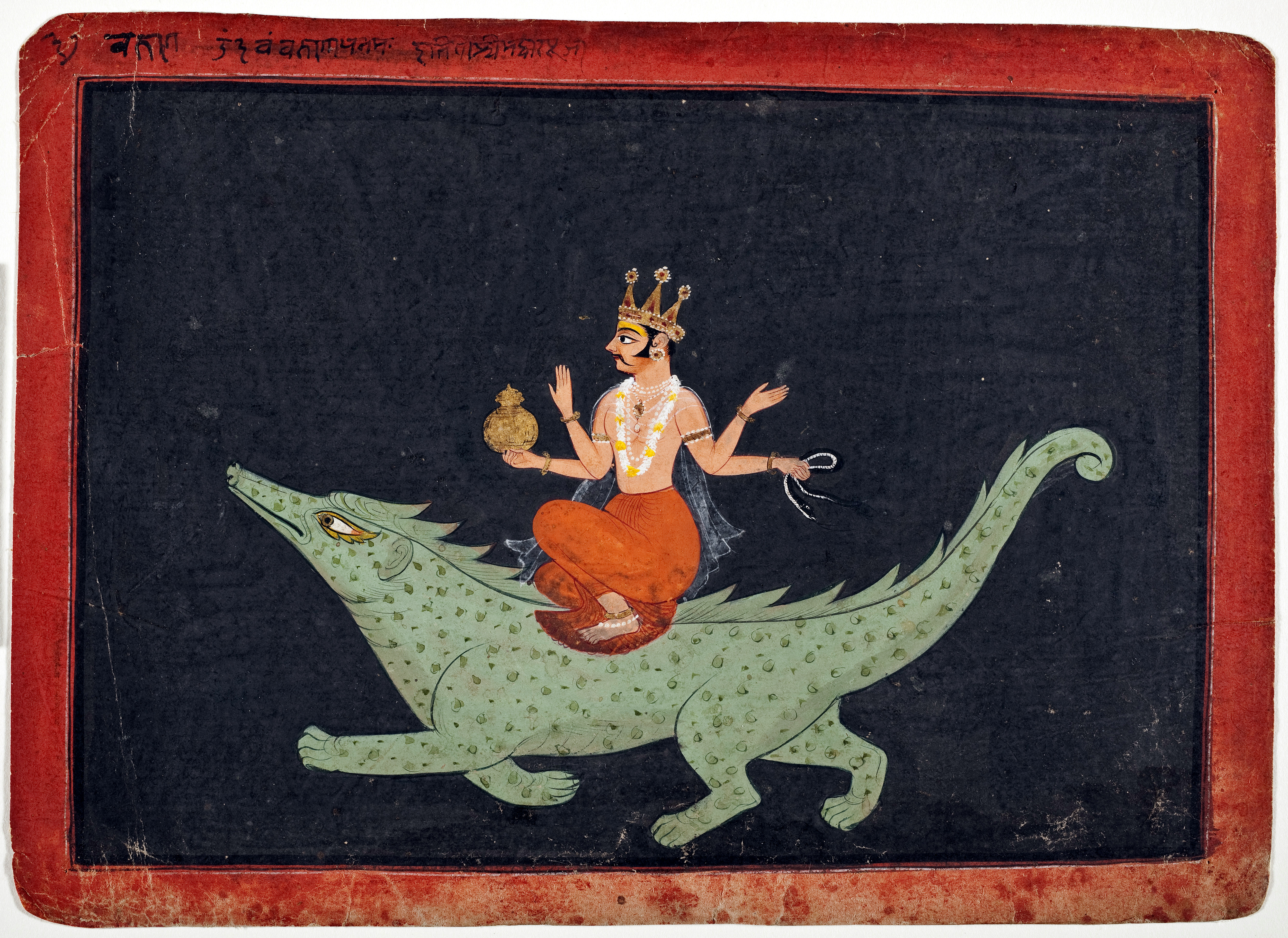
The makara, a composite aquatic creature from Indian mythology, appears as early as the first century CE in trade-linked centers like Begram in present-day Afghanistan, where carved ivory and bone objects depicted it alongside other Indian motifs. The presence of the makara at Begram, a hub connecting the Indian subcontinent with Central Asia and beyond, testifies to the long-standing movement of artistic forms and religious ideas across mountains and empires.
Today, it rests in the Tibet Museum in Switzerland, once a chapel and school for deaf children. As two spiritual traditions, Tibetan Buddhism and Christianity, intertwine in this space. That this Tibetan teapot now resides in Switzerland adds yet another layer to its journey: a Himalayan object, bearing an ancient Indian symbol, now situated in a European collection. It thus embodies the fluidity not only of tea, but of culture, belief, and material exchange.
Conclusion: Tracing Threads Through Time
As our Caravan of Culture comes to rest, the objects it has carried continue to speak. Each artifact, textile, vase, cross, or teapot, offers more than material beauty. It tells of journeys made across deserts, mountains, oceans, and empires; of encounters between distant peoples; and of beliefs, techniques, and aesthetics transformed through contact.
Some of these journeys were made in search of knowledge or trade; others were shaped by power, ambition, or spiritual longing.
Though removed from their original contexts, these objects remain embedded in global networks of meaning. They remind us that culture does not stand still. It flows, sometimes gently, sometimes turbulently, shaped by the hands and intentions of those who carry it.
This exhibition is not a final resting place, but a waystation.
As you leave it, we invite you to carry these stories forward. To reflect on the shared histories that connect us, and to recognize the echoes of the past in the objects and ideas that surround us today.
Sources:
- The Tibet Museum, Switzerland.
- Teapot at the Tibet Museum, Switzerland.
- Beer, Robert. The Encyclopedia of Tibetan Symbols and Motifs. Boston: Shambhala, 1999.
- Mehendale, Sanjyot. “Begram: Along Ancient Central Asian and Indian Trade Routes.” Cahiers d’Asie centrale 1/2 (1996): 47–64.
- Qiu, Jane. “Archaeologists Uncover Another Branch of the Silk Road: New Evidence Suggests the Ancient Trade Route Ventured through the Heights of Tibet.” Scientific American, April 1, 2016.