Copies: Same or Different Object
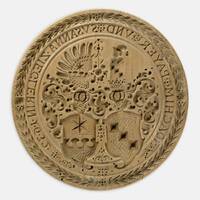
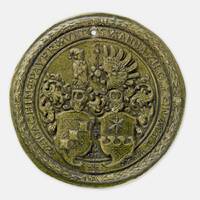
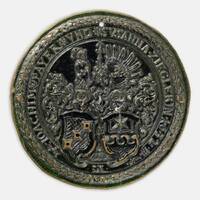
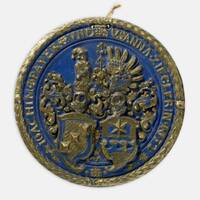
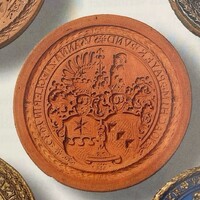
How are copies perceived? To what extent do they resemble their originals? Can they, in fact, be regarded as the same? These fundamental questions lie at the heart of our examination of the Peyer-Ziegler family's biscuit mould. In particular, we ask whether the original artefact from 1632 fulfils the same purpose as its reproductions from 1851. Furthermore, we must consider whether a change in material composition necessitates a categorical distinction between object and replica.
Our objective is not to provide definitive answers to these complex inquiries, but rather to encourage critical engagement with the issues they raise. To facilitate this reflection, we have identified and tentatively addressed three guiding questions.
1. What makes them one object?
- Causal Unity: The impression exists because of the mould — it’s a direct physical consequence.
- Ontological Dependence: The impression has no form or meaning without the mould.
- Functional Relationship: In many contexts (e.g., production), they’re treated as a single operational unit.
2. What makes them distinct objects?
- Material Independence: The impression can be made in wax, clay, or other substances, different from the mould.
- Spatial and Temporal Separation: Once the impression is made, it can be separated from the mould, both physically and chronologically.
- Perceptual Identity: Each impression might stand alone with its own interpretative or artistic value.
3. Is it nuanced?
Yes. The relationship is relational and layered. Conceptually, they are tied — impression implies mould. But materially and ontologically, they often become autonomous. Much like a cast sculpture and its original form, we may view them as linked but distinct.
This duality is elegantly mirrored in the carousel/timeline code: one continuous narrative, multiple distinct yet related images.