Peyer-Ziegler Gebäckmodel
Welcome to the Object Itinerary of the Peyer-Ziegler Pastry Mould
This website introduces the academic exploration of the Peyer-Ziegler Pastry Mould, a culturally and historically significant artifact originating from early modern Switzerland. Crafted in 1632 to commemorate the marriage of Joachim Peyer and Susanna Ziegler, this pastry mould embodies the intersection of material culture, social history, and regional craftsmanship.
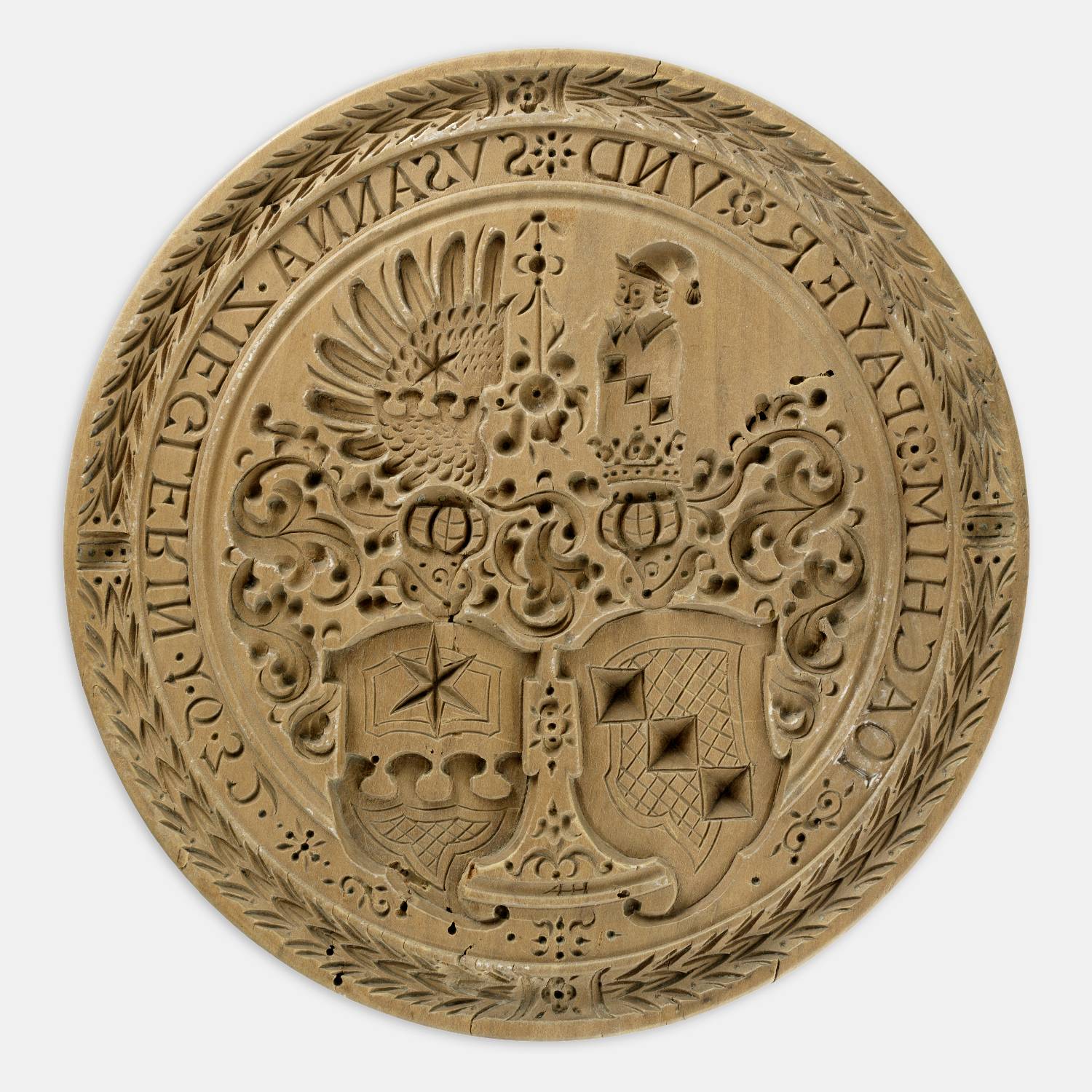
The presentation situates the mould within a broader historical and anthropological framework, examining:
-
Material Significance: The use of pearwood reflects both practical and symbolic dimensions of culinary artisanship.
-
Iconography and Symbolism: Heraldic and sacred motifs inscribed on the mould underscore familial identity and religious meaning.
-
Cultural Contexts: From private family ceremonies to public guild traditions, the object functions across different social spheres.
-
Historiographical Value: The itinerary approach illustrates how a single object can generate multifaceted historical narratives—from economic status and genealogy to food history and museum studies.
This site supports critical reflection on how objects acquire, lose, and transform meaning over time. It encourages engagement with questions of authenticity, replication, and context in the construction of historical knowledge.