Emma-Belle
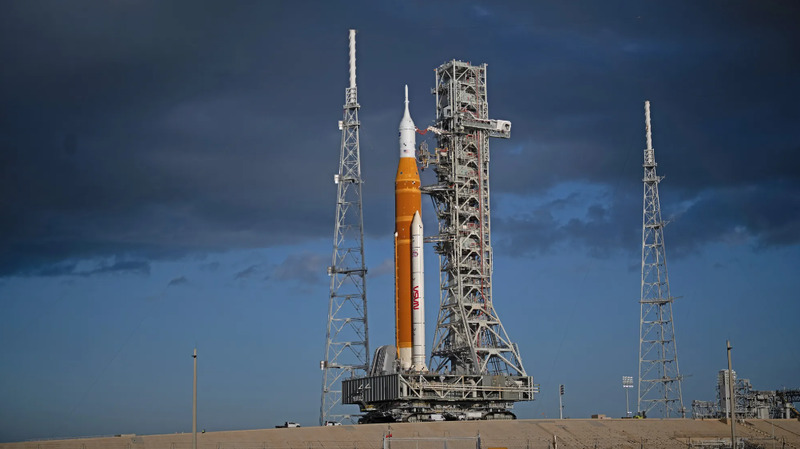
Artemis II builds on the success of the uncrewed Artemis I in 2022, and will demonstrate a broad range of capabilities needed on deep space missions. The Artemis II test flight will be NASA’s first mission with crew aboard the SLS (Space Launch System) rocket and Orion spacecraft.(https://www.nasa.gov/mission/artemis-ii/)
The Artemis II mission represents a significant moment in contemporary human spaceflight, yet comparisons to Apollo 11 are often overstated and analytically imprecise. While both missions are embedded in broader programs aimed at lunar exploration, their objectives, operational contexts, and historical significance differ in fundamental ways. A more appropriate comparison can instead be drawn between Artemis II and Apollo 8, given their closer alignment in mission design and strategic purpose.
Apollo 11 was a landmark achievement in the history of science and technology, representing the first successful human landing on the Moon. Its primary objective was the execution of a lunar surface mission, including extravehicular activity, sample collection, and the demonstration of technological supremacy during the Cold War. As such, Apollo 11 was both a scientific milestone and a geopolitical statement, culminating a decade-long race between superpowers.
In contrast, Artemis II is not designed as a landing mission. Its core objective is to conduct the first crewed test flight of NASA’s Orion spacecraft in a lunar flyby trajectory, validating life support systems, propulsion, navigation, and crew safety in deep space conditions. This makes Artemis II fundamentally a proving mission rather than an exploratory or surface-focused one. The absence of a landing component alone renders comparisons with Apollo 11 methodologically flawed.
A more analytically sound comparison emerges when considering Apollo 8. Like Artemis II, Apollo 8 was a crewed mission that did not attempt a lunar landing but instead focused on orbiting the Moon and returning safely to Earth. Both missions serve as critical precursors within their respective programs, testing hardware, mission architecture, and human performance in cislunar space. Furthermore, each mission represents a transitional phase: Apollo 8 paved the way for Apollo 11, while Artemis II is intended to enable future Artemis missions involving lunar landings, such as Artemis III.
Additionally, the broader contexts of the two programs reinforce this comparison. Apollo operated under intense geopolitical pressure with compressed timelines, whereas Artemis is characterized by international collaboration, long-term sustainability goals, and incremental development. Artemis II, like Apollo 8, reflects a stepwise engineering and operational validation strategy rather than a singular, high-risk objective.
In conclusion, while Artemis II and Apollo 11 are both iconic within their respective eras, their missions are not directly comparable due to differences in scope, purpose, and historical context. A more rigorous academic comparison situates Artemis II alongside Apollo 8, as both missions occupy analogous roles as preparatory, crewed lunar missions that enable subsequent surface exploration. (ChatGPT)
https://youtu.be/xCm85-nNfQ4
Cessna or Bristell? https://forms.gle/8r3TdwKRDtnPHNr89
Chocolate or Vanilla?