-
 General Idea, Test Tube (1979)
 2009 11. ESS-SPA
-
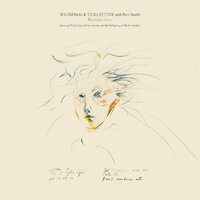 Mummer Love with Patti Smith
 A sonic cross-continental experience, Mummer Love is the second album in the Perfect Vision triptych collaboration between Soundwalk Collective and Patti Smith. For this body of work, Soundwalk Collective journeyed to Africa to explore the intricacies of Arthur Rimbaud’s most obscure period. After leaving France and what he deemed the ‘western stagnation’, Rimbaud found himself in Harar, Ethiopia – an epicenter of Sufism in Africa. Sufi practise focuses on the renunciation of worldly things, the purification of the soul and the mystical contemplation of God’s nature. Sufism is a mystical form of Islam, and its music is about reaching a communal ecstatic state, and once you find yourself there, you are granted access to the unknown. The Soundwalk Collective spent time with the Sufi group of Sheikh Ibrahim to record their music and chants in the shrine with the use of Audio-Technica microphones. “You obtain connections to other levels of yourself and consciousness,” Stephan Crasneanscki mentions of the musical process. “This connection, like poetry, is a universal language.
A language of the soul, for the soul.”
As with the other albums in the triptych, the Collective searched for hidden, earthy sounds that hold memories and embed existence. For Mummer Love, they also found themselves recording under the tree where Rimbaud photographed the shrine of Sheik Abadir Umar ar-Rida al Harari, the founder of the holy city Harar. “As the rain fell, I wondered if I was hearing the drops hitting the leaves the same way Rimbaud did 140 years ago,” Crasneanscki says. These sounds and Sufi chants coexist with Patti Smith’s interpretation of Rimbaud’s poems, as she recites and sings among them in a call and response, sharing the same musical and spiritual space.
Smith’s only poem is the title track, “Mummer Love”, written to Rimbaud; her words are rooted in multiple aspects of the self: from the passion of a lover to the care of a mother, and everything in between. Further contributions to this LP come from Mulatu Astatke, widely considered the father of Ethio-jazz, and Phillip Glass, who has long felt a connection to Sufi music – here coming together and evoking a call and response between piano and vocals of the Sufi masters. It is simultaneously the first time Glass collaborates with Smith, and so Harar becomes an extraordinary meeting place for all to celebrate the beauty of Rimbaud’s work.
Referring to the overall work, Smith likens the project to a fourth mind equation. “Because we are working with other people’s work, and not just reading it but channelling these people, they become a fourth mind. We are Rimbaud, you, I, and the work,” Smith says in conversation with Crasneanscki. The unification of all minds together magnifies its power and potential. “It makes me think of Rimbaud’s energy, his strong will,” Smith says. “If we, the living, send out radio and energy waves, the energy of those last poems is still reverberating. It can’t be silenced, because we understand that this work and the artists are not dead, they find life when we are recording them.”
Entitled The Perfect Vision, this musical triptych, which has been co-produced with Leonardo Heiblum and supported by the Analogue Foundation, aims to go beyond 20/20 vision and explore a dimension that exists on a non-physical plane. What one can physically see is only the beginning – this project transcends what we think we see, by multiplying experiences, languages and energies. “We went through places like Mexico, Ethiopia and India to search for a perfect vision, in spaces where you can still feel a sacred presence – where the Gods are still among you,” says Crasneanscki. “In this idea of perfect vision, there is the idea of oneness, and with that comes a sense of supreme love.”
Mummer Love will be released 8th November, to mark the anniversary of the death of Arthur Rimbaud, on 10th November (1891).
-
Martin Beutler, Video zu "Panarchistische Verfassungsstelle" (2009)
2009 11. ESS-SPA
-
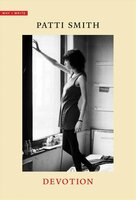 Devotion
 A work of creative brilliance may seem like magic&;its source a mystery, its impact unexpectedly stirring. How does an artist accomplish such an achievement, connecting deeply with an audience never met? In this groundbreaking book, one of our culture&;s beloved artists offers a detailed account of her own creative process, inspirations, and unexpected connections.
 
Patti Smith first presents an original and beautifully crafted tale of obsession&;a young skater who lives for her art, a possessive collector who ruthlessly seeks his prize, a relationship forged of need both craven and exalted. She then takes us on a second journey, exploring the sources of her story. We travel through the South of France to Camus&;s house, and visit the garden of the great publisher Gallimard where the ghosts of Mishima, Nabokov, and Genet mingle. Smith tracks down Simone Weil&;s grave in a lonely cemetery, hours from London, and winds through the nameless Paris streets of Patrick Modiano&;s novels. Whether writing in a café or a train, Smith generously opens her notebooks and lets us glimpse the alchemy of her art and craft in this arresting and original book on writing.
-
 Patti Smith Collected Lyrics, 1970–2015
 An American original, Patti Smith is a multi-disciplined artist and performer. Her work is rooted in poetry, which infused her 1975 landmark album, Horses. A declaration of existence, Horses was described as 'three chords merged with the power of the word'; it was graced with the now iconic portrait by Robert Mapplethorpe, the subject of her award-winning memoir Just Kids.
Initially published in 1998, Patti Smith's Complete Lyrics was a testimony to her uncompromising poetic power. Now, on the fortieth anniversary of the release of Smith's groundbreaking album, Collected Lyrics has been revised and expanded with more than thirty-five additional songs, including her first, 'Work Song', written for Janis Joplin in 1970, and her most current, 'Writer's Song', to be recorded in 2015. The collection is liberally illustrated with original manuscripts of lyrics from Smith's extensive archive.
Patti Smith's work continues to retain its relevance, whether controversial, political, romantic or spiritual. Collected Lyrics offers forty-five years of song, an enduring commemoration of Smith's unique contribution to the canon of rock and roll.
-
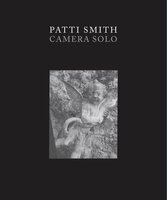 Camera Solo
 Exhibition:
Patti Smith: Camera Solo, on view at the Wadsworth Atheneum from October 21, 2011 to February 19, 2012, was the first museum exhibition of Patti Smith’s photography in the United States and included seventy photographs, one multimedia installation, and one video work.
The pioneering artist, musician, and poet, Smith has made her mark on the American cultural landscape throughout her 40-year career, from her earliest explorations of artistic expression with friend and vanguard photographer Robert Mapplethorpe in the 1960s and 70s to her profound influence on the nascent punk rock scene in the late 1970s and 80s.
Exhibition Catalogue
This captivating selection of 70 intimate black and white photographs conveys Patti Smith's singular experience as a photographer as it relates to many facets of her fascinating life and career. Exquisitely designed and produced, Patti Smith: Camera Solo accompanies the first museum exhibition of the artist's photography in the United States.
Using either a vintage Land 100 or a Land 250 Polaroid camera, Smith photographs subjects inspired by her connections to poetry and literature as well as pictures that honor the personal effects of those she admires or loves. In the catalogue's interview, conducted by Susan Lubowsky Talbott, the artist talks about her "respect for the inanimate object" as well as the talismanic qualities of things in her life. We see, for instance, a picture of Mapplethorpe's slippers or a porcelain cup that belonged to her father, and are drawn into their intimacy and quiet power. Moreover, these images reveal how the camera has proven to be a means for Smith to retreat—undisturbed—to "a room of my own."
From her explorations as a visual artist in the 1960s and 70s and her profound influence on the nascent punk rock scene in the late 1970s and 80s, to Just Kids, her National Book Award-winning memoir of life with her beloved friend Robert Mapplethorpe, Smith continues to make an indelible mark on the American cultural landscape.
-
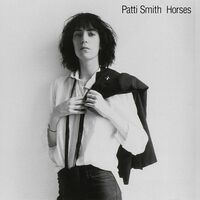 Horses
 Horses is the debut studio album by American musician Patti Smith. It was released on November 10, 1975 by Arista Records. A fixture of the mid-1970s underground rock music scene in New York City, Smith signed to Arista in 1975 and recorded Horses with her band at Electric Lady Studios in August and September of that year. She enlisted former Velvet Underground member John Cale to produce the album.
The music on Horses was informed by the minimalist aesthetic of the punk rock genre, then in its formative years. Smith and her band composed the album's songs using simple chord progressions, while also breaking from punk tradition in their propensity for improvisation and embrace of ideas from avant-garde and other musical styles. Smith's lyrics on Horses were alternately rooted in her own personal experiences, particularly with her family, and in more fantastical imagery. The album also features adaptations of the rock standards "Gloria" and "Land of a Thousand Dances".
-
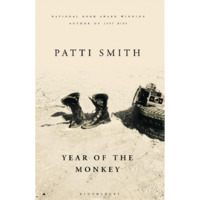 Year of the Monkey
 Patti Smith finds herself tramping the coast of Santa Cruz, about to embark on a year of solitary wandering. Unfettered by logic or time, she draws us into her private wonderland, with no design yet heeding signs, including a talking sign that looms above her, prodding and sparring like the Cheshire Cat. In February, a surreal lunar year begins, bringing with it unexpected turns, heightened mischief, and inescapable sorrow. In a stranger's words, "Anything is possible: after all, it's the year of the monkey." For Patti Smith - inveterately curious, always exploring, tracking thoughts, writing the year evolves as one of reckoning with the changes in life's gyre: with loss, aging, and a dramatic shift in the political landscape of America. Smith melds the Western landscape with her own dreamscape. Taking us from Southern California to the Arizona desert; to a Kentucky farm as the amanuensis of a friend in crisis; to the hospital room of a valued mentor; and by turns to remembered and imagined places - this haunting memoir blends fact and fiction with poetic mastery. The unexpected happens; grief and disillusionment. But as Patti Smith heads toward a new decade in her own life, she offers this balm to the reader: her wisdom, wit, gimlet eye, and above all, a rugged hope of a better world. Riveting, elegant, often humorous, illustrated by Smith's signature Polaroids, Year of the Monkey is a moving and original work, a touchstone for our turbulent times.
-
Bildstrecke zu "Utopics"
2009 11. ESS-SPA
-
 Testeintrag
-
Peter Wyssbrod, Park (1980)
1980 7. ESS-SPA
-
 Willy Wimpfheimer, Figur VII (1986)
 1986 8. ESS-SPA
-
 Artikel über Mary Vieira, Entwickelbare Unterbrechung (1953-1966)
 1966 4. ESS-SPA
-
Der Artikel "Keiner weiss so richtig, wer die Opfer waren..." vom Hamburger Abendblatt, geschrieben von Kai Schiller. Veröffentlicht am 27.4.2023.
-
 Reglement zur 5. Schweizerischen Plastikausstellung
 1970 5. ESS-SPA
-
 Reglement der 1. Schweizerischen Plastikausstellung
 1954 1. ESS-SPA
-
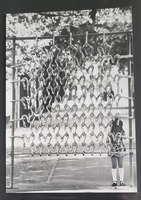 Peter Travaglini, Haken-Cat (1974)
 1975 6. ESS-SPA
-
 Peter Travaglini, CAT 70 (1970)
 Die aus bemaltem Styropor gefertigte schwimmende Plastik "Cat 70" ist eine Pop-Art Plastik aus der Serie "Catene" (Ketten). An einem stürmischen Tag riss sie sich aus der Verankerung und trieb auf den offenen See hinaus, wo sie vom Künstler in einem Boot wieder "eingefangen" wurde. Fotografie: Peter Zurschmiede
-
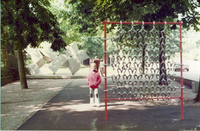 Peter Travaglini, Haken-Cat (1974)
 Im Vordergrund hängt die 60-teilige frei zusammensetzbare Aluminium-Plastik "Haken-Cat" in einem bemalten Eisenmetall-Gerüst in der Pasquart-Allee. Sie ist ein Werk aus der Pop-Art Serie "Catene" (Ketten) und ist seit 2017 im Besitz der Stiftung Kunsthaus Grenchen. Die Fotografie erstellte mein Vater Friedrich Märki.
Im Hintergrund zu sehen ist die Betonskulptur "Le Dix" von Peter Hächler.
-
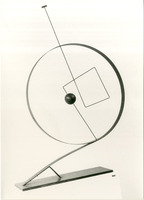 Walter Linck, Construction mobile (1958)
 1958 2. ESS-SPA
-
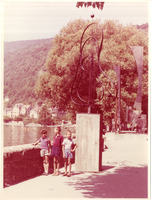 Walter Linck, Harpe Animée (1961/62)
 1962 3. ESS-SPA
-
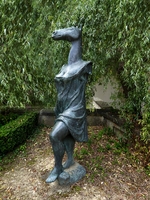 Albert Schilling, Demeter Erinys
 1954 1. ESS-SPA
-
 Bulletin de participation à la 1er Exposition suisse de sculpture
 1954 1. ESS-SPA
-
Interview mit Migmar Dhakyel
Oral History Interview mit Migmar Dhakyel für das Seminar "Einbürgerungen à la Schweizermacher"
-
Interview mit Federica Di Maggio
Oral History Interview mit Federica Di Maggio für das Seminar "Einbürgerungen à la Schweizermacher"